

This post is also available in:
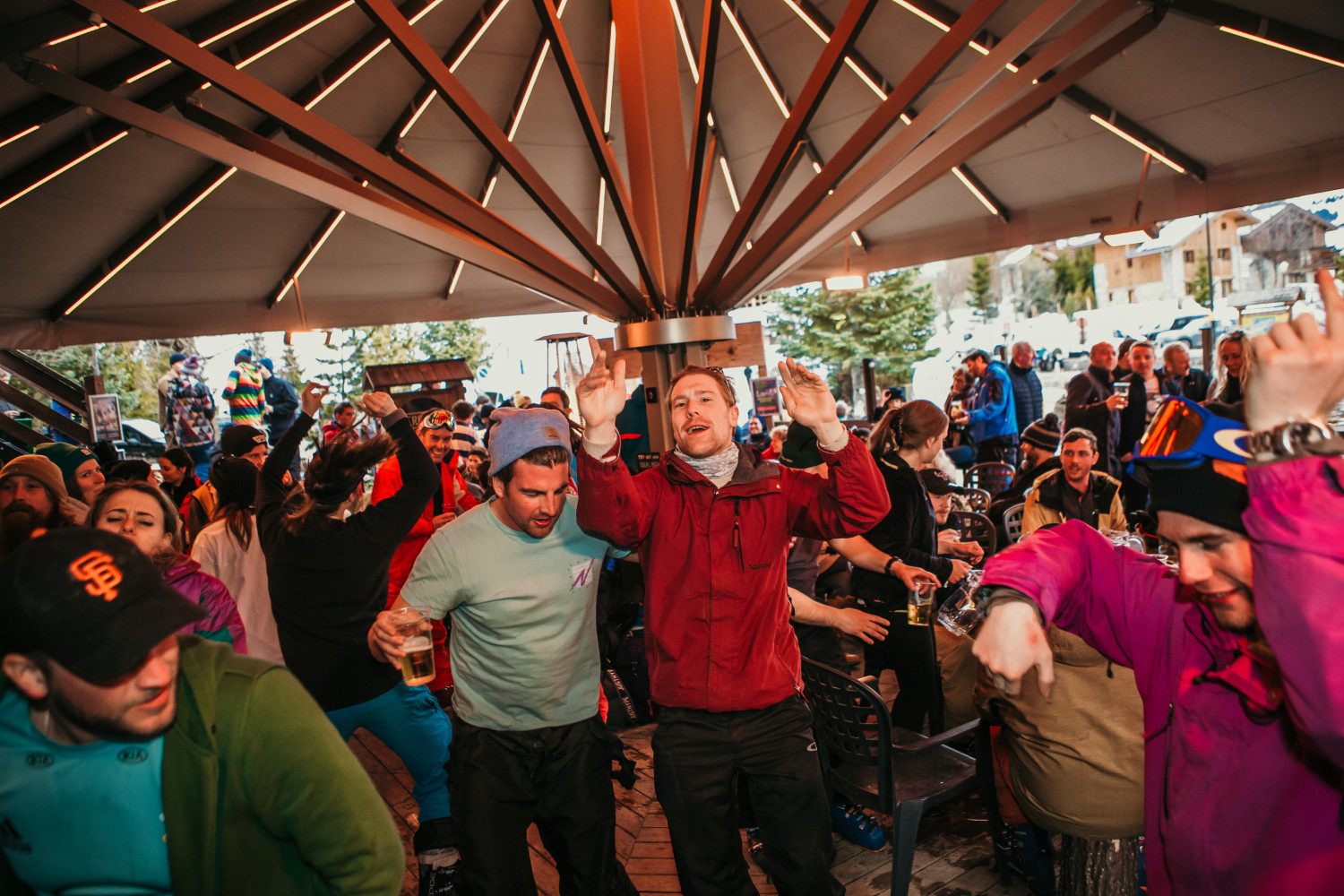
Après-ski is a short trading window with a lot of competition. The strongest bars don’t simply book bands: they use music, timing and programming to turn passing skiers into customers who stay, spend and come back.
France has just recorded 56.1 million skier-days for winter 2025/26, up 2.4% on the previous winter, putting it back at number one globally for ski-area attendance for the first time since 2014/15.
For bars and mountain restaurants, that represents an enormous flow of people coming off the mountain every afternoon.
But skier numbers alone do not fill a bar.
At roughly the same time each day, thousands of people are making a very quick decision: one drink here, ski back to the accommodation, head to another venue, meet friends somewhere else or stay and turn one drink into an entire afternoon.
That is where après-ski programming becomes commercially interesting.
A successful après bar is not simply somewhere with music. It is somewhere that understands when people arrive, what makes them choose a venue, what makes them stay and what gives them a reason to return later in the week.
And there is evidence that music can influence all four.
Live music isn’t just atmosphere
It is easy to describe live music as something that “creates a great atmosphere”, but for a bar operator that is only part of the story.
CGA by NielsenIQ research into live music in UK hospitality found that 78% of consumers surveyed said they were more likely to visit a pub or bar if it offered live music, 73% said they were likely to stay longer and 76% said they were likely to buy more drinks.
Those figures relate to UK hospitality consumers rather than French ski resorts, so they shouldn’t be presented as direct predictions for an Alpine venue. They are, however, highly relevant to the behaviour an après-ski operator is trying to influence: footfall, dwell time and spend.
A separate Live Music Index produced by GigPig and CGA by NIQ surveyed 511 British hospitality venues that host live music, alongside 291 that did not. Among venues hosting music, 79% reported increases in revenue and footfall, while the report associated live events with increases in average spend per visit, dwell time and footfall.
Again, that doesn’t mean putting a guitarist in the corner automatically increases an Alpine bar’s turnover by a fixed percentage.
The useful point is that live entertainment can affect the commercial behaviours bars actually care about.
And that gives us something much more useful to work with than simply saying, “people like live music”.
French customers already associate music with a better bar experience
There is French research too, although it is older and focuses on music in cafés generally rather than live performance specifically.
A SACEM study of French consumers found that 84% of café customers preferred venues to have music. Among customers recalling music during their last café visit, 77% said it made the visit more pleasant, 72% said it put them in a good mood and, importantly, 69% said it made them want to return.
A resort audience is unusual because the same visitor may be available to you for six or seven consecutive days. If someone discovers your venue on Monday, enjoys it and comes back on Wednesday and Friday with more friends, the value of that first experience changes completely.
For an après bar, repeat visits within the same holiday week can be just as important as attracting new customers every afternoon.
Après-ski has a different commercial rhythm from a normal bar
A city bar might gradually fill from 18:00 and trade until late into the night. Après-ski is compressed.
The customer flow is largely dictated by the mountain: weather, lift closing times, piste access, lunch behaviour, where accommodation is located and how people move through the resort. A venue can therefore have a relatively narrow window in which to capture the crowd. The mistake is to assume that programming begins when the band starts.
In reality, it begins much earlier.
If your natural ski traffic starts arriving at 15:30, the first question isn’t necessarily, “What band should we book?”
It is:
“What should this place feel like at 15:30, 16:30 and 18:00?”
The best après sessions build rather than explode
There is a tendency to think that après means maximum energy from the first song. It doesn’t have to.
Imagine a terrace at 15:15:
Twenty people arrive.
Then another group.
Then two ski-school groups finish nearby.
Someone orders a round.
The tables begin filling.
At that stage, firing the biggest singalong of the afternoon into a half-empty terrace can actually flatten the event rather than lift it.
There is academic evidence that music characteristics can affect how customers behave in hospitality environments. A recent restaurant field experiment found that guests exposed to slower-tempo background music remained for an average of 80.3 minutes compared with 57.3 minutes under faster music. The researchers did not find a corresponding difference in bill value, which is important: music can influence behaviour, but longer dwell time does not automatically equal higher spend.
The experiment concerned restaurant background music rather than live après-ski, but the operational lesson is useful.
Tempo, volume and energy are tools.

Don’t kill the room when the band finishes
This is one of the simplest programming mistakes. A band plays a brilliant final song. The room is at maximum energy. Everyone cheers.
Then the microphones come off, someone starts packing a drum kit away and five minutes of silence follows while somebody searches for Spotify. The spell is broken. People put their jackets on.
For a venue trying to retain customers, the transition after the performance is part of the performance.
That might mean a DJ taking over immediately, a carefully prepared playlist, a second live format or simply having somebody responsible for making sure the musical energy does not suddenly disappear.
For high-energy après venues, band into DJ can be particularly effective because the live performance provides the focal moment while the DJ gives the bar continuity afterwards.
The customer shouldn’t feel that the event has ended simply because one artist’s set has.
Residencies can create something one-off bookings cannot
Variety is useful, but constantly changing every artist, concept and day can also make an entertainment programme harder for customers to understand. A residency builds familiarity. Guests start recognising the artist. Staff understand how they work. Technical setup becomes easier. The artist gets to know the peculiarities of the room.
And, perhaps most importantly, the venue begins to become associated with something.
“That band plays there every Thursday.”
That is much more memorable than:
“They have some sort of music most days.”
The ideal programme is often somewhere between repetition and variety: recognisable weekly anchors, combined with different artists and larger special events through the season.
Your quiet day may be more valuable than your busiest day
One of the most common assumptions is that the biggest entertainment budget should go on the busiest day.
Sometimes it should. But if Saturday is already full, music may not generate much additional revenue.
The opportunity might actually be Thursday. If a recognisable Thursday après event can turn an average trading day into a strong one, the incremental value of the entertainment may be considerably greater.
The same logic applies across the season.
French mountain accommodation averaged 73% occupancy during winter 2025/26, but that headline hides considerable variation: January reached 67% and March 57%, both improving substantially compared with the previous winter.
Après programming should acknowledge those fluctuations.
A peak February week and a quieter January week do not necessarily need the same budget, line-up or production.
The best seasonal programme allocates entertainment according to where it can make the biggest difference, rather than simply booking the same thing every week from December to April.

The artist is only half of the experience
There is little point spending heavily on a good band and putting them through an inadequate PA.
After-ski performance environments can be particularly challenging because they often involve terraces, unusual room shapes, cold temperatures, quick changeovers and noise constraints. Poor sound creates two problems at once.
Customers don’t get the experience the venue paid for, and artists compensate by pushing harder, which can make the room louder without making it sound better.
Good production is not necessarily about using more equipment. It is about using the right equipment for the space.
These are operational details, but they have a direct effect on the customer experience.
There are also practical obligations to think about
In France, using music commercially requires the appropriate authorisation and rights arrangements, while bars and restaurants must also comply with regulations around amplified sound and neighbourhood disturbance. French government guidance notes that venues exceeding certain sound thresholds may also need an acoustic impact study.
Interestingly, SACEM’s own tariffs explicitly distinguish after-work and après-ski musical events, recognising them as a particular form of music-led hospitality activity rather than ordinary background music.
For venue managers, that is another reason to treat an entertainment programme as an operational project rather than simply a series of artist bookings.
So what should an après-ski bar actually measure?
If you’re investing in entertainment throughout a winter, the answer shouldn’t be based on whether the manager thought Friday “felt really good”.
Track it.
You don’t need sophisticated software. Start with a handful of figures:
| Metric | Why it matters |
|---|---|
| Revenue during après hours | Shows the overall commercial performance of the session |
| Average transaction / spend | Helps separate bigger crowds from higher customer value |
| Approximate dwell time | Indicates whether customers are staying longer |
| Footfall | Shows whether entertainment is attracting additional customers |
| Transactions per hour | Helps identify when the session actually peaks |
| Repeat local customers | Shows whether a regular audience is forming |
| Performance by weekday | Identifies where music creates the biggest incremental benefit |
| Social tags and shares | Gives an indication of organic reach and word of mouth |
| Revenue after the live set | Reveals whether you’re retaining the crowd or losing it when the performance ends |
Look at several weeks rather than one date.
Weather, snowfall, occupancy, school holidays and individual events can all distort a single day’s numbers.
The objective is to spot a pattern.
The goal isn’t to have live music. It’s to become known for your après.
Research gives us good reason to believe that music can affect venue choice, dwell time, customer experience and return intention. In UK hospitality research, consumers report being more likely to visit, remain longer and buy more drinks when live music is present; French research also shows a strong link between music, enjoyment and customers’ stated desire to return.
But music itself is not the strategy.
The programme is the strategy.
The right artist at the wrong time can fail.
An excellent band through a poor sound system can fail.
A packed Saturday event that would have been packed anyway may produce less incremental value than a carefully built Wednesday residency.
And a fantastic live set followed by ten minutes of silence can send an entire room out of the door.
The strongest après-ski bars think about the complete afternoon: the first skier arriving, the build in energy, the peak, the transition afterwards and the reason someone might choose to come back two days later.
That’s when a bar stops being somewhere that has live music and starts becoming somewhere people associate with great après-ski.
Building an après-ski programme for your venue
Piste Productions works with bars, mountain restaurants and hospitality venues across the Alps, providing everything from individual artists and regular residencies to DJs, bands, technical production and full seasonal entertainment programmes.
We start with the venue rather than the artist list: your location, natural footfall, quieter days, capacity, customer profile, sound restrictions, existing equipment and the atmosphere you want to build.
Because filling an entertainment calendar is easy.
Building a programme that people remember — and come back for — takes a little more thought.
